Senior secured means a lender holds first claim against specific, identified collateral ahead of all other creditors. It changes the sequence of who gets repaid if a borrower defaults - it does not eliminate credit risk. Whether the protection is real depends on underwriting quality, honest collateral valuation, and whether the lender can actually enforce that security when it matters. Seniority decides the order. Those three things do the actual work.
Being first in line to get paid is not the same thing as being guaranteed to get paid. That distinction is the whole subject of this article, because "senior secured" gets used in pitch decks as if it were a safety label rather than a position in a queue.
What "senior secured" actually means in a lending context
"Private credit" covers a wide range of actual risk positions under one marketing umbrella - senior secured loans, unitranche facilities, mezzanine debt, unsecured structures. Being senior and secured doesn't collapse that range to zero risk. It changes who gets paid first and from what specific asset, rather than from a general unsecured claim against a company that may have nothing left.
The two words do separate jobs. Senior describes position in the creditor hierarchy - this lender gets paid before subordinated debt holders and equity. Secured describes the collateral arrangement - the lender holds a registered charge over specific assets. Together they mean: first claim, against named collateral, ahead of everyone else. Neither word says anything about whether the collateral was valued correctly, or whether enforcement is straightforward in the jurisdiction where the assets sit.
The creditor waterfall - where "senior secured" sits
Why Southeast Asia keeps coming up in this conversation
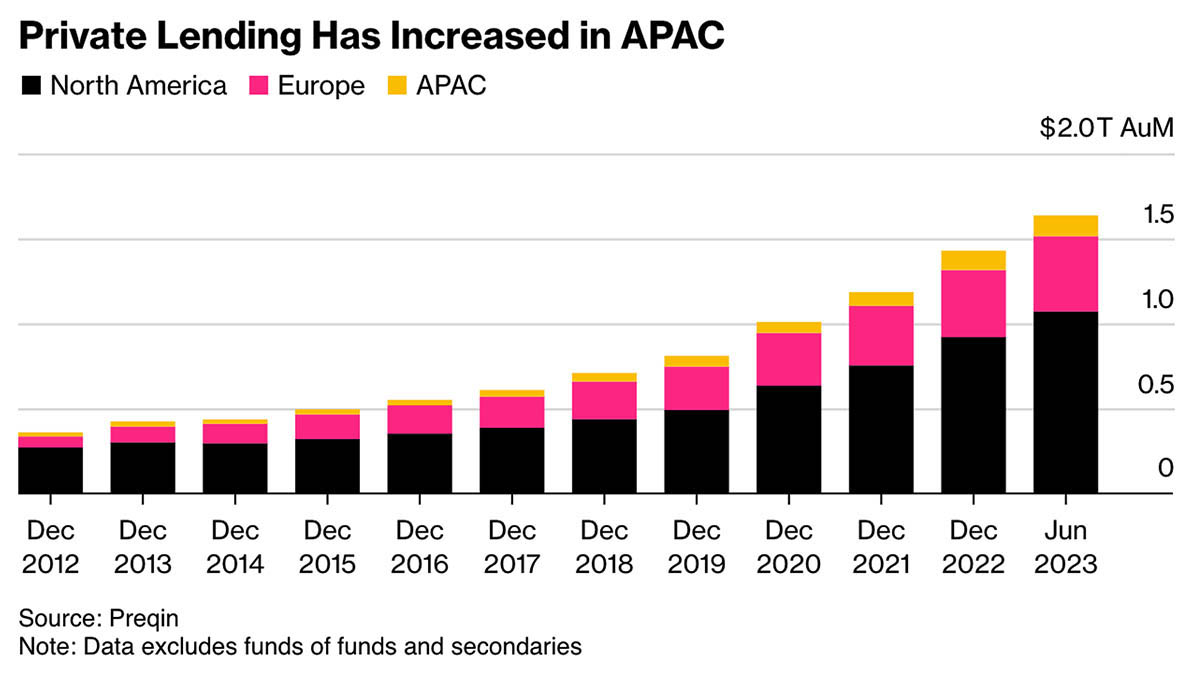
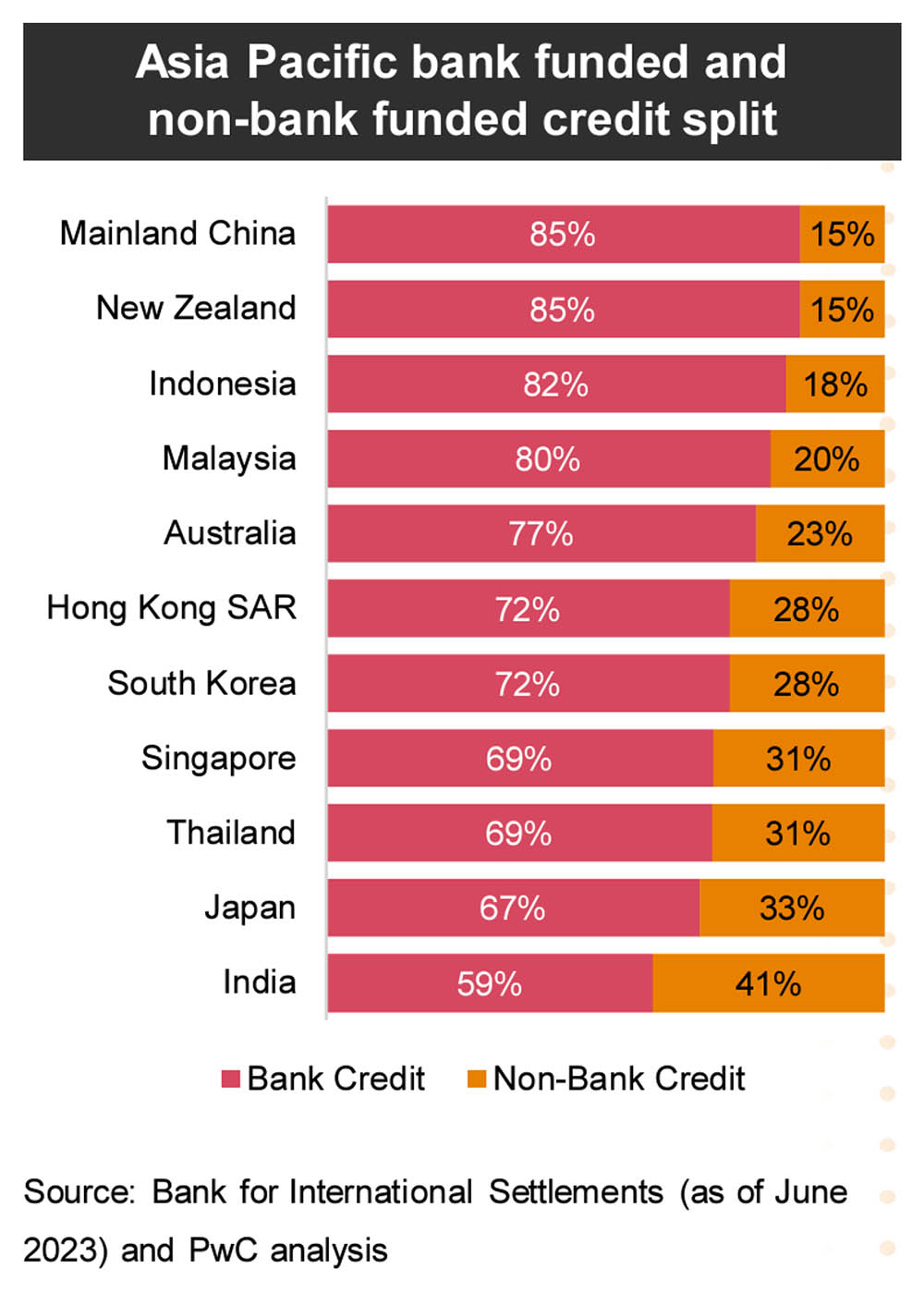
The region's mid-market - too large for microfinance, too small or too locally-specific for global syndicated lending - has had thinner access to structured private credit than similarly sized businesses in the US or Europe. Regional banks dominate lending to this segment in many markets, and bank capacity gets constrained by capital requirements, sector concentration limits, and in some markets a preference for relationship-based lending over structured security packages.
That gap creates a specific opportunity: borrowers who are creditworthy by any reasonable underwriting standard but who can't access the pricing or structure they need from their existing banking relationships. A well-structured senior secured lender can fill that gap at terms that reflect the actual risk - provided the underwriting is honest about what "actual risk" means in each specific market.
The three things that actually determine whether "senior secured" means anything
1. Underwriting quality
Seniority is only as good as the analysis behind the loan. A first-lien position on a borrower who was never going to repay is not a safe credit - it's a recovery exercise. The underwriting question is whether the borrower has the cash flow to service the debt under a range of scenarios, not just the base case. Collateral is the backstop, not the thesis.
2. Collateral valuation honesty
A charge over real estate in a market where valuations are inflated, or over receivables from a single customer who is also under stress, is not the same as a charge over liquid, independently valued assets. The quality of the collateral - its liquidity, its independence from the borrower's own performance, and the reliability of its valuation - determines how much the security charge is actually worth in a stress scenario.
3. Enforcement capability
Holding a registered charge over collateral in a jurisdiction where enforcement takes five years and requires local court proceedings is a different risk profile from holding the same charge in Singapore or Hong Kong. The legal enforceability of security across Southeast Asian jurisdictions varies materially. A manager who cannot explain their enforcement track record or their legal infrastructure in each market they lend into is not answering the right question.
What to ask a manager before allocating
Underwriting
- What is your minimum debt service coverage ratio at origination?
- What LTV covenants apply, and what triggers a covenant breach?
- How do you stress-test borrower cash flows before committing?
- What is your historical default rate, by vintage?
Collateral
- Who values the collateral, and how often is it revalued?
- Is the collateral independent of the borrower's operating performance?
- What is your haircut methodology on illiquid collateral types?
- Have you ever had to enforce security? What happened?
Enforcement
- In which jurisdictions do you hold security, and under which law?
- What is your average enforcement timeline by jurisdiction?
- Do you use local legal counsel at origination or only at default?
- What is your recovery rate on defaulted positions?
Structure & Governance
- Is the fund MAS-licensed or operating under an exemption?
- How are sub-funds segregated if you run multiple strategies?
- What is the fund's redemption and lock-up structure?
- Who is the independent fund administrator and auditor?
Region-specific risks that don't appear in the headline yield
| Risk Factor | Severity | What it means in practice |
|---|---|---|
| Legal enforcement variability | High | Security enforcement timelines and outcomes differ materially across SG, MY, ID, PH, TH. A charge that is straightforward in Singapore may take years to enforce in another jurisdiction. |
| Currency risk | High | USD- or SGD-denominated loans to borrowers with local-currency revenue create FX mismatch. A borrower who can service debt at current rates may not be able to at a 15% depreciation. |
| Collateral liquidity | Medium | Real estate collateral in secondary markets may be illiquid precisely when you need to sell it. Valuation at origination and realisation value at default can diverge significantly. |
| Concentration risk | Medium | Smaller funds may have significant exposure to a handful of borrowers or one sector. Headline diversification metrics can mask single-name concentration. |
| Manager track record depth | Medium | Asian private credit is a younger asset class than US or European equivalents. Many managers have not yet managed through a full credit cycle in this region. |
The question that separates serious managers from pitch-deck managers: Ask for the default rate by vintage, the recovery rate on defaulted positions, and the enforcement timeline on any security they've had to call. A manager who has never had a default has either not been lending long enough, or is not being candid. A manager who has had defaults and can explain what happened and what they recovered is giving you the information that actually matters.
What MAS licensing adds to this picture
A Singapore-based private credit manager operating under a MAS Capital Markets Services Licence is subject to conduct requirements, minimum capital standards, and regular MAS supervision. That doesn't guarantee good underwriting - regulatory oversight is not a substitute for investment judgment. What it does provide is a governance layer: the manager has passed MAS's fit-and-proper assessment, is subject to ongoing compliance obligations, and is accountable to a regulator with real enforcement powers.
For an allocator doing due diligence on an Asian private credit manager, MAS licensing is a necessary condition, not a sufficient one. It narrows the field to managers who have met a defined regulatory standard. The underwriting questions still need to be asked.